Agencies tend to sell far more web development services than their internal teams can handle. This is the reality of running a web agency in 2026. Projects come in waves, clients expect shorter timelines, and hiring enough developers to cover every technical requirement rarely makes financial sense. You end up paying for capacity you may not need six months from now.
White label development gives agencies an alternative way to handle this capacity problem. But the partner you choose matters. A freelancer who picks up overflow work is not necessarily equipped to operate as an extension of an agency’s delivery team. Similarly, a conventional outsourcing company may have strong developers, but its processes, communication, or client-facing model may not work when your agency owns the relationship and the other company stays invisible.
The companies listed below have been evaluated from an agency’s perspective, considering factors such as experience working exclusively or primarily with agencies, technical depth, white label delivery practices, communication, scalability, ongoing support, and how easily a development team can fit into an existing agency workflow. After all, project management and QA matter. So does post-launch maintenance.
Company size and service count are not enough to make the cut. A large development company can still be a poor white label partner if its delivery model creates more work for the agency. The stronger options are those that understand how agencies sell, scope, manage, review, and deliver web projects while keeping the agency firmly in control of the client relationship.
The Best White Label Web Development Companies for US Agencies
1. AgencyMinds
Ideal For:
Digital marketing, branding, creative, advertising, and web agencies that need a dedicated WordPress development partner behind the scenes.

Overview:
AgencyMinds is a white label web development partner built around the way agencies actually deliver projects. With over 10 years of experience working with WordPress, Shopify, and HubSpot, Webflow, Wix, and more, the team specializes in agency-focused solutions by providing development services from behind-the-scenes, while the partner agency manages its clients directly. The projects are delivered under the agency’s name and come with signed NDAs. No direct communication is ever conducted with the end-clients. If your agency requires a development company for one specific project or for regular deliveries, AgencyMinds will integrate into its processes.
Core Services:
- White Label Website Development
- White Label Website Design
- White Label CMS Development
- White Label Ecommerce Development
- White Label WordPress Development
- White Label Shopify Development
- White Label Webflow Development
- White Label WordPress Maintenance
Pros:
- Works exclusively with agencies
- Deep WordPress specialization
- 100% white-label delivery
- NDA-first approach
- Dedicated team and named project manager
- Supports both project-based and ongoing engagements
- Can work within an agency’s existing tools and workflows
Cons:
Best suited to agencies looking for a serious development partner rather than occasional low-cost freelance help.
2. White Label IQ

White Label IQ operates in the full-stack mode but maintains the focus on WordPress for its web development operations. It works only with digital agencies and provides custom WordPress builds, WooCommerce, Shopify, Laravel, Vue.js, SaaS development, and other web technologies. Their work is all about fixed-cost projects, dedicated teams, or as ad-hoc hours based on the agencies’ workflow. Project teams from White Label IQ operate within the agency’s tools and processes, while agencies keep their relationship with clients.
Pros:
- Works exclusively with agencies
- Strong WordPress and custom development capabilities
- Supports multiple technology stacks
- Fixed-cost, dedicated-resource, and hourly engagement models
- Dedicated project management
- Structured QA and post-launch support
- Designed to operate within agency workflows
Cons:
Its broader technical scope is useful for agencies handling varied projects, but may be more than a WordPress-focused agency needs for straightforward builds.
3. Seahawk Media
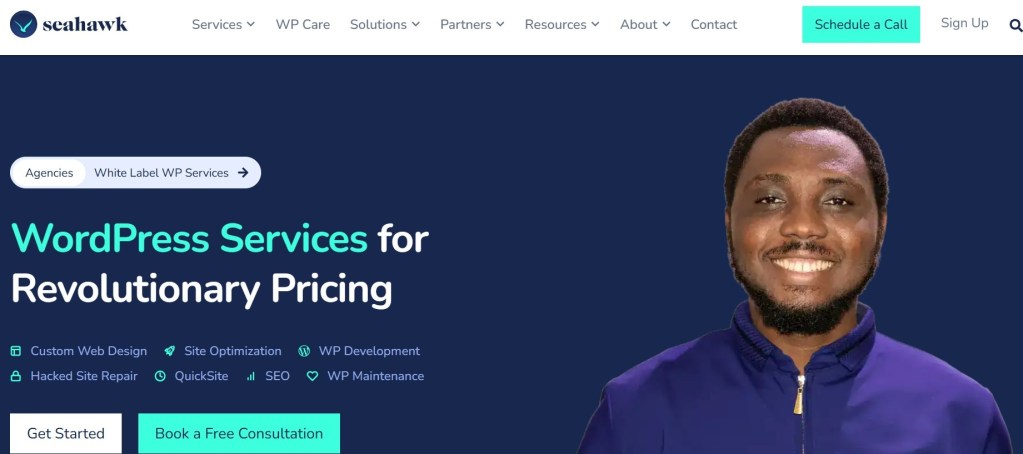
Seahawk Media is a well-known WordPress service provider to agencies that require development and maintenance services without hiring additional internal staff. Their white label services include WordPress development, migrations, maintenance, plugins, and other tasks that include account management, Slack chat, NDA policy, and reporting tools for clients. According to this agency, over a thousand agencies from all over the world use their services.
Pros:
- Strong WordPress specialization
- Dedicated account manager
- White-label development and maintenance
- Custom plugin development
- NDA-protected delivery
- Suitable for agencies looking to scale WordPress services
Cons:
Seahawk’s larger service ecosystem can be useful for agencies that want more than development, but agencies looking for a smaller, tightly focused development team may prefer a more specialized partner.
4. SiteMile
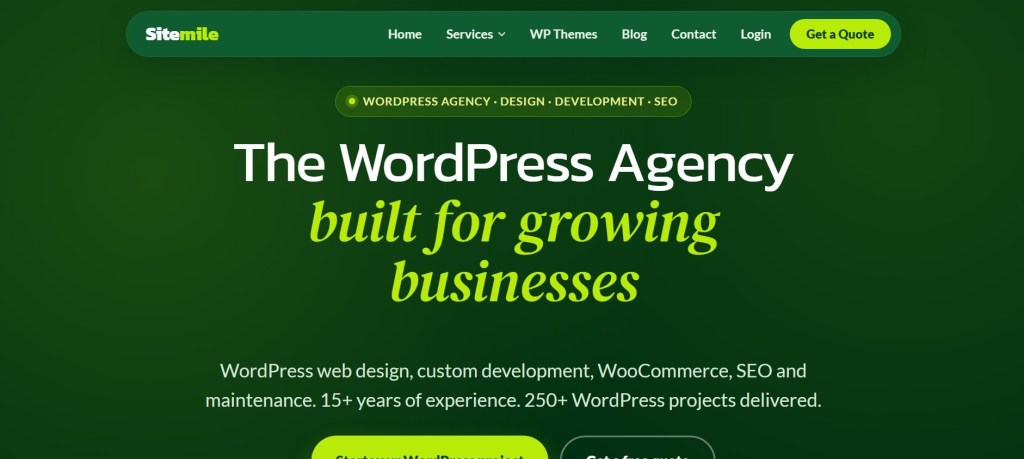
The next agency on our list is SiteMile. The company has more than fifteen years of experience working with WordPress and has worked both directly with clients and as a white label provider for agencies. Among the services that SiteMile provides there are custom WordPress development, WooCommerce, web applications, SEO and custom development, as well as WordPress themes and products developed by the company itself.
Pros:
- 15+ years of WordPress experience
- White-label support for agencies
- Custom WordPress development
- WooCommerce expertise
- Broader web and application development capabilities
- SEO services available alongside development
- Experience across different types of WordPress projects
Cons:
Unlike companies built exclusively around white-label agency delivery, SiteMile also works directly with end clients. Agencies that consider strict agency-only exclusivity a requirement may want to weigh this distinction carefully.
5. DevOut Labs
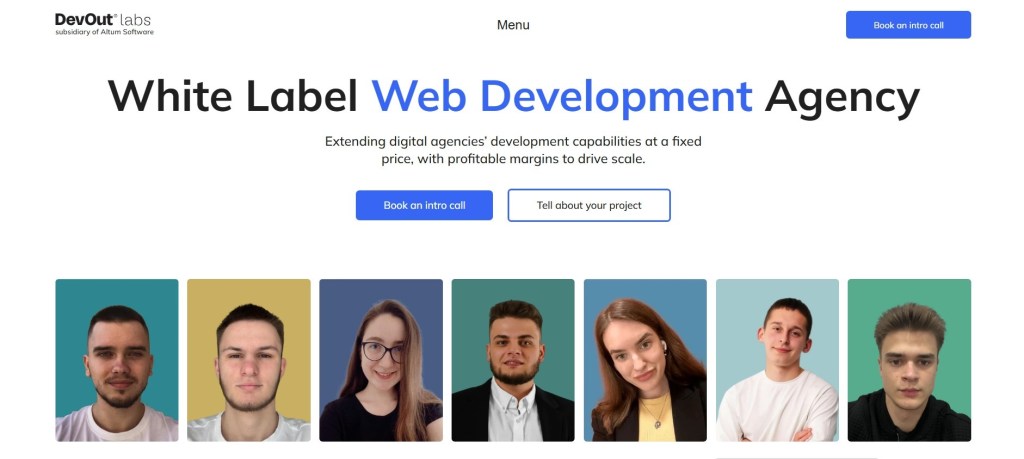
DevOut Labs is an agency that aims at boosting the development capabilities of digital agencies. Its solution revolves around white-label WordPress, Webflow, and Shopify development services. These are delivered at fixed prices and encompass both custom and templated solutions. It claims to have completed more than 430 projects and boasts a track record of maintaining its partnerships with agencies for an average of 2.5 years.
Pros:
- Focused on digital agency partnerships
- White-label delivery model
- Fixed-price project structure
- WordPress, Webflow, and Shopify support
- Custom and templated website development
- Dedicated project management
- Ongoing maintenance options
- Three-stage QA process
Cons:
Its core offering is strongest around website delivery and ongoing agency support. So, agencies looking for deeper application development or a much broader technology stack may need a more full-stack partner.
6. WP Minds

WP Minds is a WordPress development and support agency that caters to companies in the UK and the US, as well as to agencies and white-label partners. This agency’s model encompasses all WordPress development services, including maintenance, fixing bugs, landing pages and technical support. Engagement can take place on either per project or monthly hours retainer basis, among others.
Pros:
- Dedicated agency and white-label offering
- WordPress-focused development
- Per-project and retainer options
- Overflow and emergency support
- Ongoing maintenance capabilities
- Custom WordPress development
- Agency-specific workflow onboarding
- White-label confidentiality
Cons:
WP Minds is primarily a WordPress specialist, so agencies that regularly sell projects across several CMS platforms or require extensive non-WordPress application development may need a broader technical partner.
How to Choose the Right White Label Web Development Partner
The right partner should fit into an agency’s existing delivery operation. The following checks can expose problems early, before they show up in a client project.
-
Start with Agency Fit
Before looking at technical capabilities, determine whether the company understands the agency model.
- Does it regularly work with agencies rather than primarily serving end businesses?
- Can it operate completely behind the scenes?
- Does it understand that the agency owns the client relationship?
- Will all client communication go through the agency?
- Can it adapt to the agency’s project management and approval process?
A technically capable developer can still be a poor fit if these boundaries are unclear.
-
Evaluate Technical Depth
“WordPress development” can mean anything, from building a basic brochure site to developing custom functionality around a complex WooCommerce stack. The label itself tells you very little.
To gain clarity, look for experience with:
- Custom WordPress themes and plugins
- WooCommerce development
- APIs and third-party integrations
- WordPress migrations
- Performance optimization
- Security and vulnerability fixes
- Custom functionality and troubleshooting
- Hosting and deployment requirements
The technical bench should match the projects the agency actually sells. There is little point paying for capabilities the agency rarely needs, while missing expertise required for its more demanding builds.
-
Test Their Communication
Communication problems tend to surface long before technical problems become obvious. Test this during the evaluation stage.
Check:
- Who will manage the agency relationship
- How quickly the team responds to questions
- Whether technical issues are explained clearly
- How progress and blockers are reported
- Whether potential delivery risks are flagged early
- How the team handles feedback and changing requirements
A good partner should not need constant chasing to keep a project moving.
-
Run a Small Paid Test Project
A sales call tells you what a company claims it can do. A portfolio shows what it has done. A paid pilot shows how it actually works with your agency.
Give the shortlisted partner a real project with a defined scope and reasonable deadline. Then assess:
- Development quality: Does the finished work meet the technical and design requirements?
- Brief accuracy: Did the team follow the specification without repeatedly needing clarification?
- Timeline discipline: Was the agreed delivery date respected?
- Communication: Were updates, questions, and blockers handled properly?
- Revision handling: How efficiently did the team respond to feedback?
- Troubleshooting: Could it diagnose and resolve issues without excessive hand-holding?
- QA: Was the work properly tested before handoff?
- Documentation: Were relevant technical details documented clearly?
- Post-launch support: How quickly were launch-related issues addressed?
- Maintenance: What happens when the site needs ongoing attention?
This tells an agency considerably more than testimonials or a polished portfolio. A company can show impressive websites and still be difficult to manage once deadlines, revisions, and technical issues enter the picture.
-
Check the Commercial Model
The cheapest development quote is not necessarily the most economical option. Look at how the pricing structure fits the agency’s own sales model.
Compare:
- Project-based pricing
- Monthly retainers
- Dedicated development resources
- Hourly arrangements
- Minimum project or monthly commitments
- Revision charges
- Scope-change costs
- Urgent or rush-request pricing
- Maintenance and support fees
Then run the numbers against the agency’s own client pricing. The partner needs to leave enough room for the agency to cover account management, strategy, design, QA, and margin.
-
Verify White-Label Protection
White-label arrangements depend on clear boundaries. Get specific terms established before client work begins.
Verify:
- NDA and confidentiality requirements
- Client data and information protection
- Code and intellectual-property ownership
- Non-solicitation provisions
- Restrictions on direct client communication
- Who can access client accounts and credentials
- How credentials are stored and shared
- Whether the partner can use completed work in its own portfolio
These details are easy to overlook when a project is going smoothly. But they become considerably more important when the relationship gets tested.
-
Think Beyond the First Website
instead of only for the current project.
Ask whether the team can support:
- Recurring WordPress development
- Website maintenance
- New website builds
- WooCommerce projects
- Emergency troubleshooting
- Post-launch fixes
- Increasing project volumes
- Additional developers or technical resources
The strongest partnerships eventually become part of the agency’s delivery infrastructure. The partner knows how the agency works, the agency knows what to expect, and neither side has to reinvent the wheel for every new website.
Conclusion
Choosing a white label web development company comes down to more than technical capability or pricing. The right partner should understand agency delivery, protect the client relationship, communicate reliably, and handle increasing project volume without creating more work for your team.